
Roasted Spring Vegetables
This post may contain affiliate links. Read our disclosure policy.

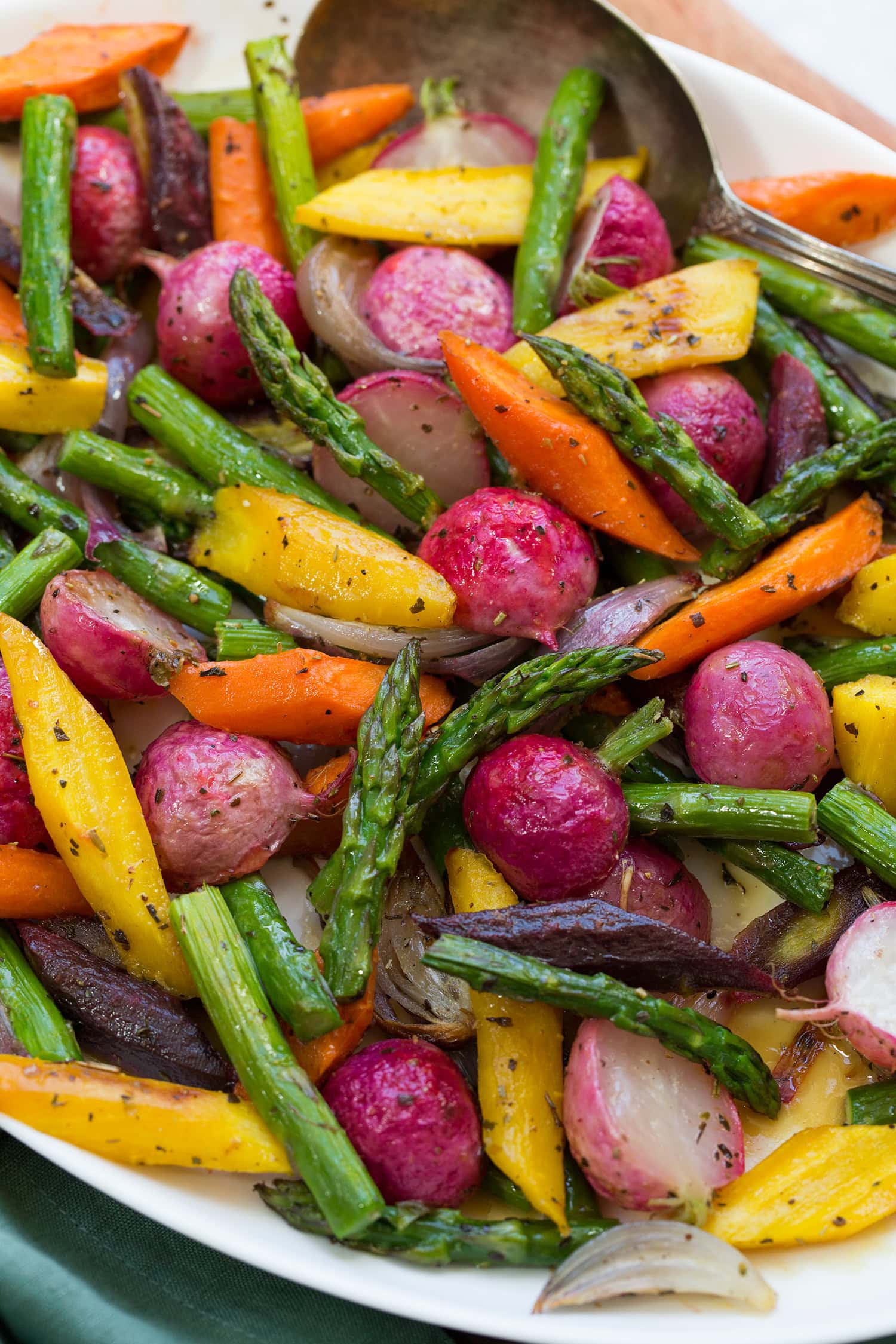
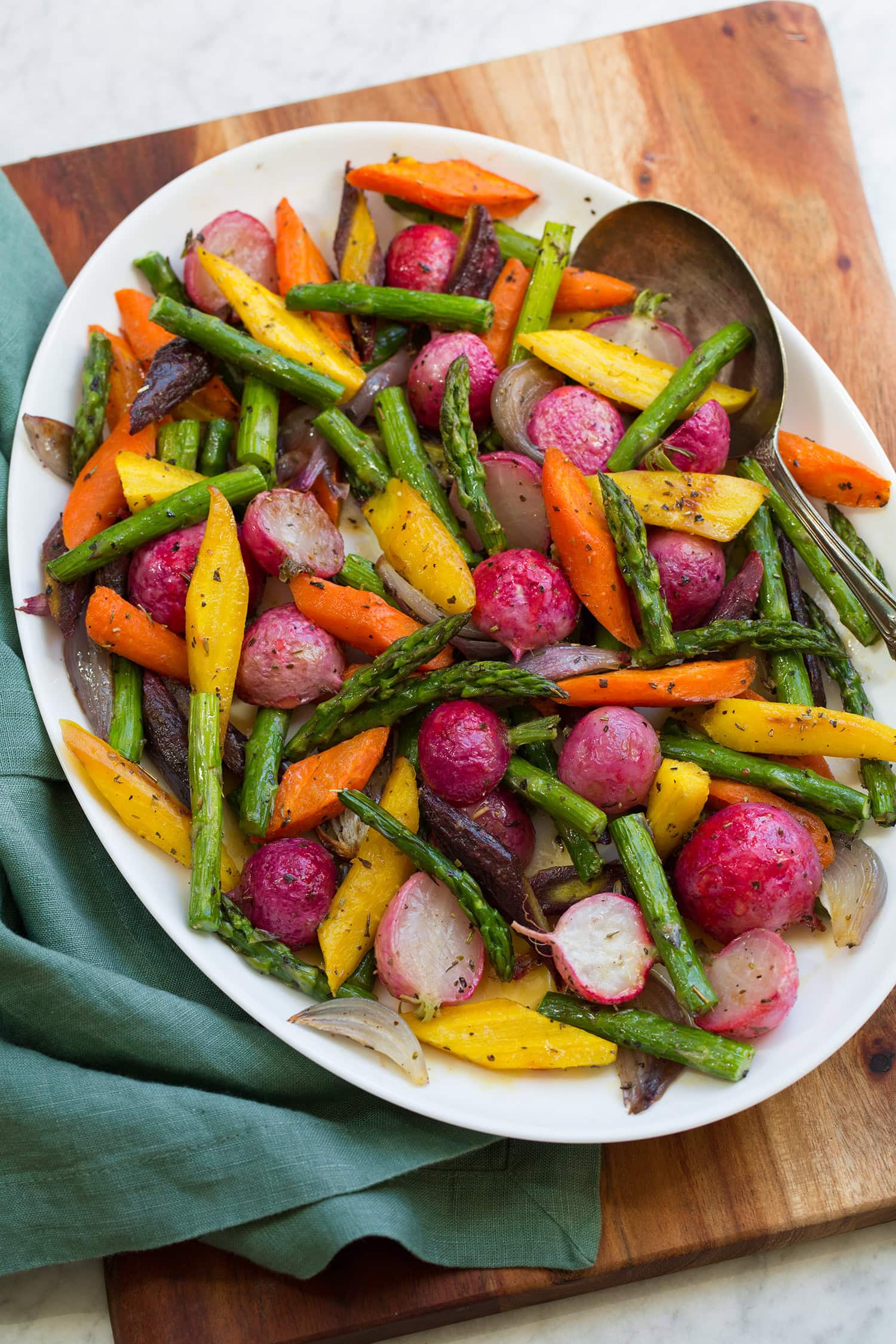
Oven Roasted Spring Vegetables are a vibrantly colorful vegetable medley made with a trio of rainbow carrots, earthy asparagus, peppery radishes all coated with and herby honey mustard glaze. It’s a wholesome, appealing side dish with such an inviting flavor!
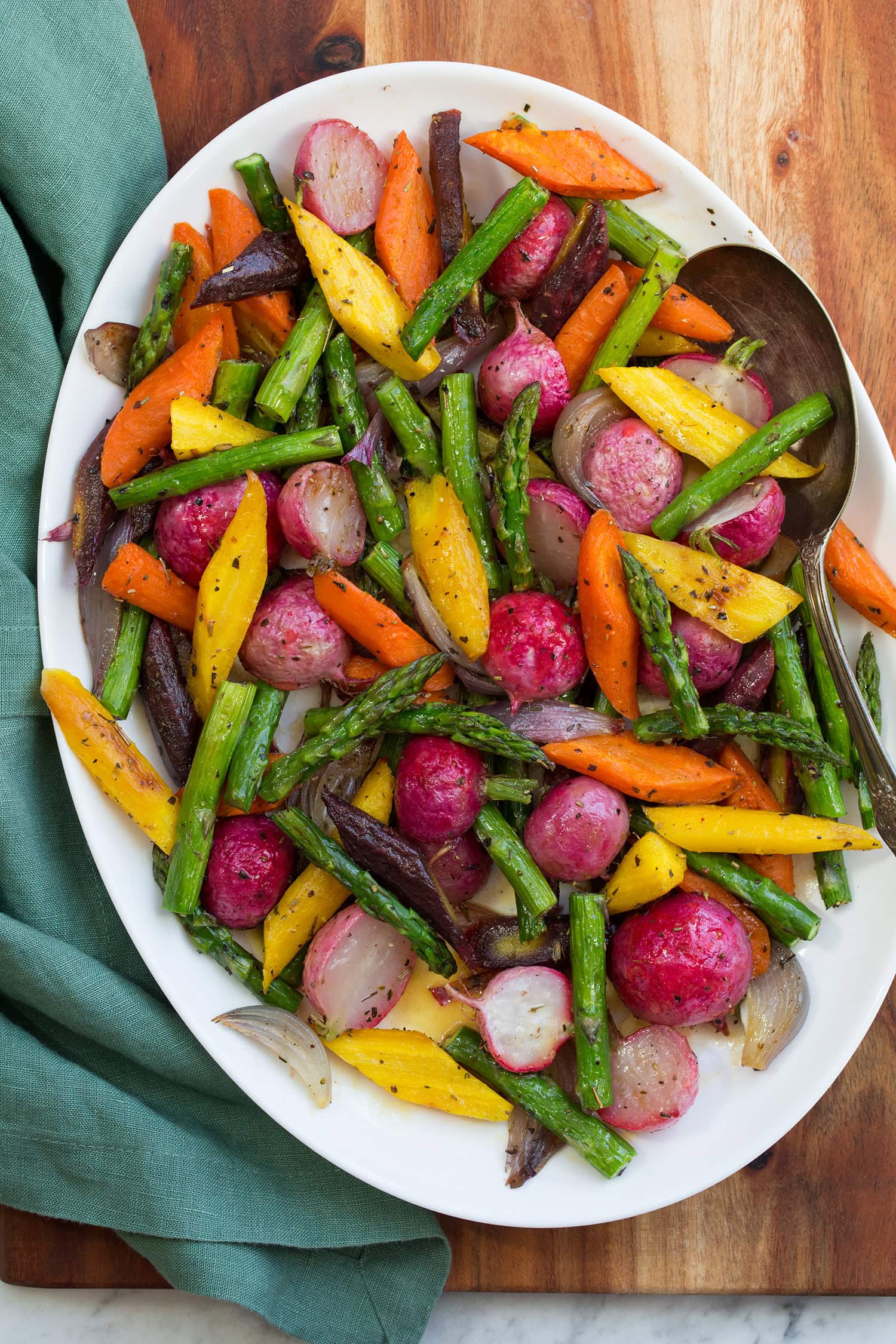
This gorgeous dish, mostly made by nature, will be the highlight of any meal! Its eye catching colors is certain to have everyone eating with their eyes first.
It pairs well with a wide variety of main proteins including roasted chicken, pan seared steak, skillet salmon, and a holiday ham roast. You could also pair it with a vegetarian dish such as a pesto pasta or pasta with alfredo sauce.
This healthy vegetable recipe is easy enough for a weeknight meal but fittingly fancy enough for a holiday feast. It would be an excellent side dish option for an Easter or Mothers Day meal.
You might find its fun colors even get the kids excited about eating their vegetables. It’s the right way to eat the rainbow.
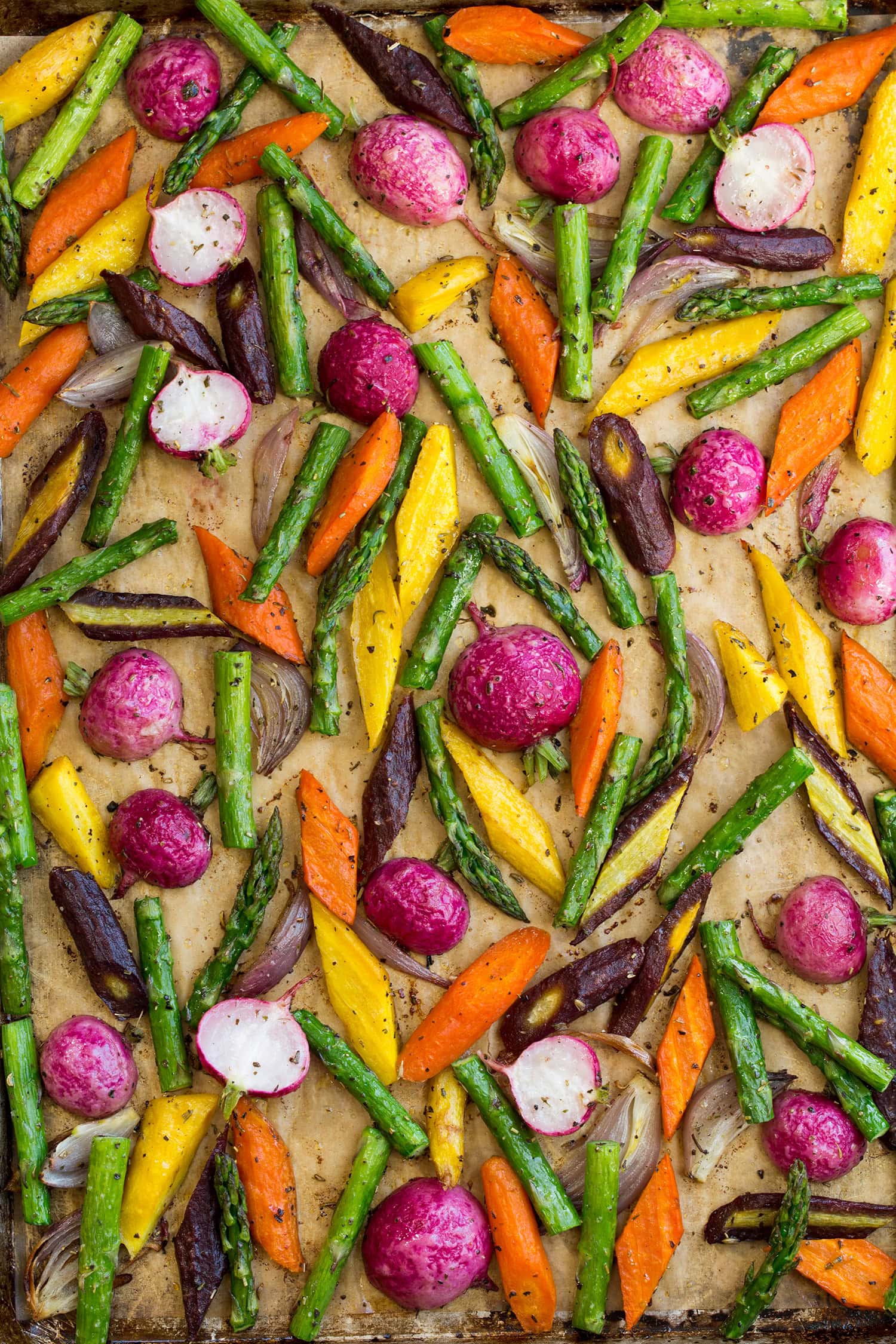
Roasted Spring Vegetables
Carrots: I recommend using a blend of rainbow carrots that are orange, purple and yellow. However if you only have orange those will be a pretty option here as well.
Radishes: Look for the most fresh and vibrant colored radishes.
Asparagus: Preferably use asparagus that has a medium thickness. It will hold up better than the thin asparagus and it tastes better than the thick asparagus.
Shallot: Half of a small red onion sliced and a clove of garlic minced could be substituted for the shallot.
Olive oil: You can use extra virgin or refined olive oil.
Herbs de Provence: I love this herb blend here, but if you don’t have it you could use an Italian seasoning blend.
Salt and black pepper: Season the vegetables to taste.
Honey: If you want to make this recipe vegan use maple syrup in place of honey.
Lemon: For the best flavor I recommend using fresh lemon. If you need a substitute you can try red wine vinegar.
Dijon mustard: This is a bold mustard so a little will go a long ways with flavor.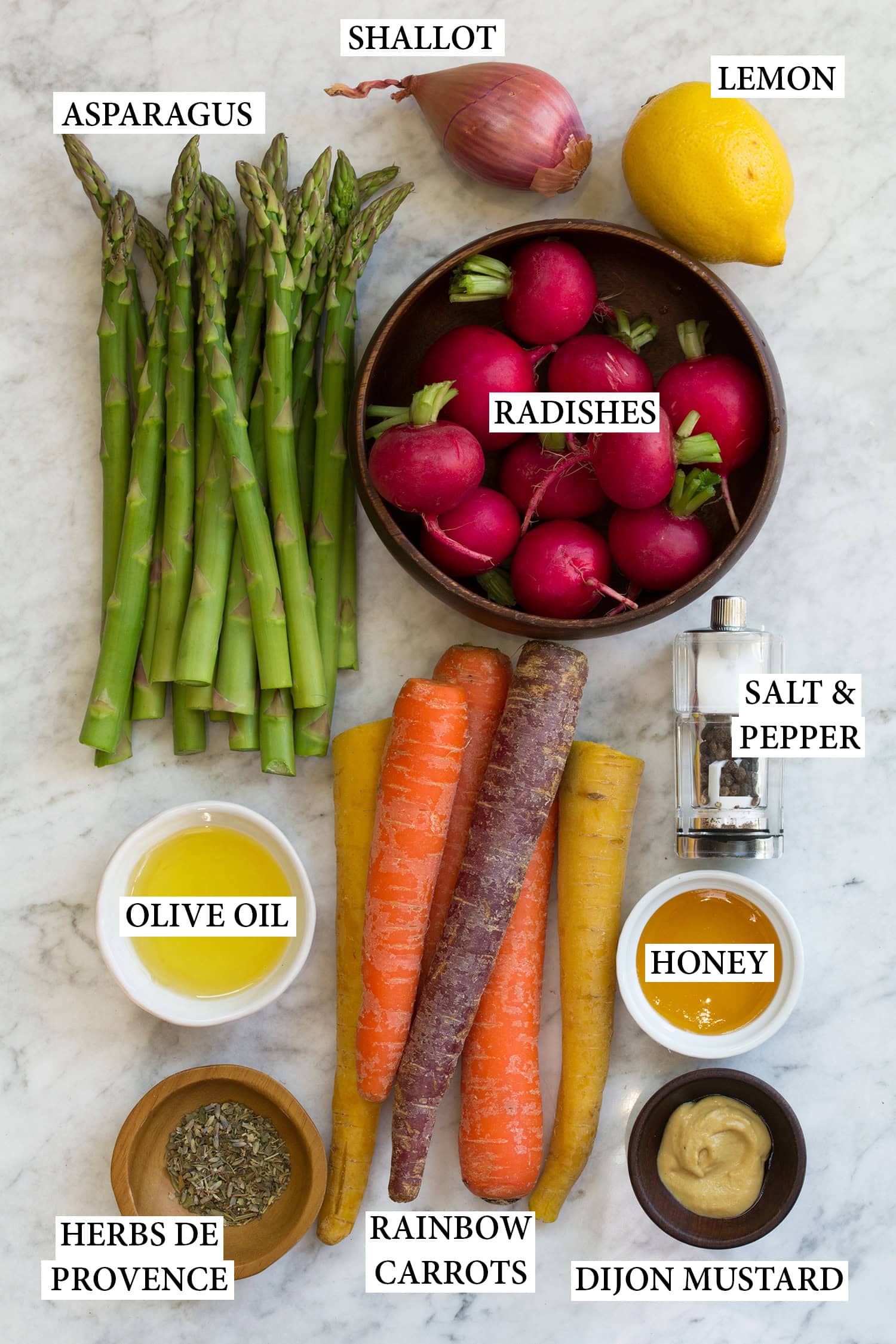
How to Make Roasted Spring Vegetables
Heat oven, prepare pan: Heat oven to 425 degrees. Line a rimmed 18 by 13-inch baking sheet with parchment paper or spray with non-stick cooking spray.
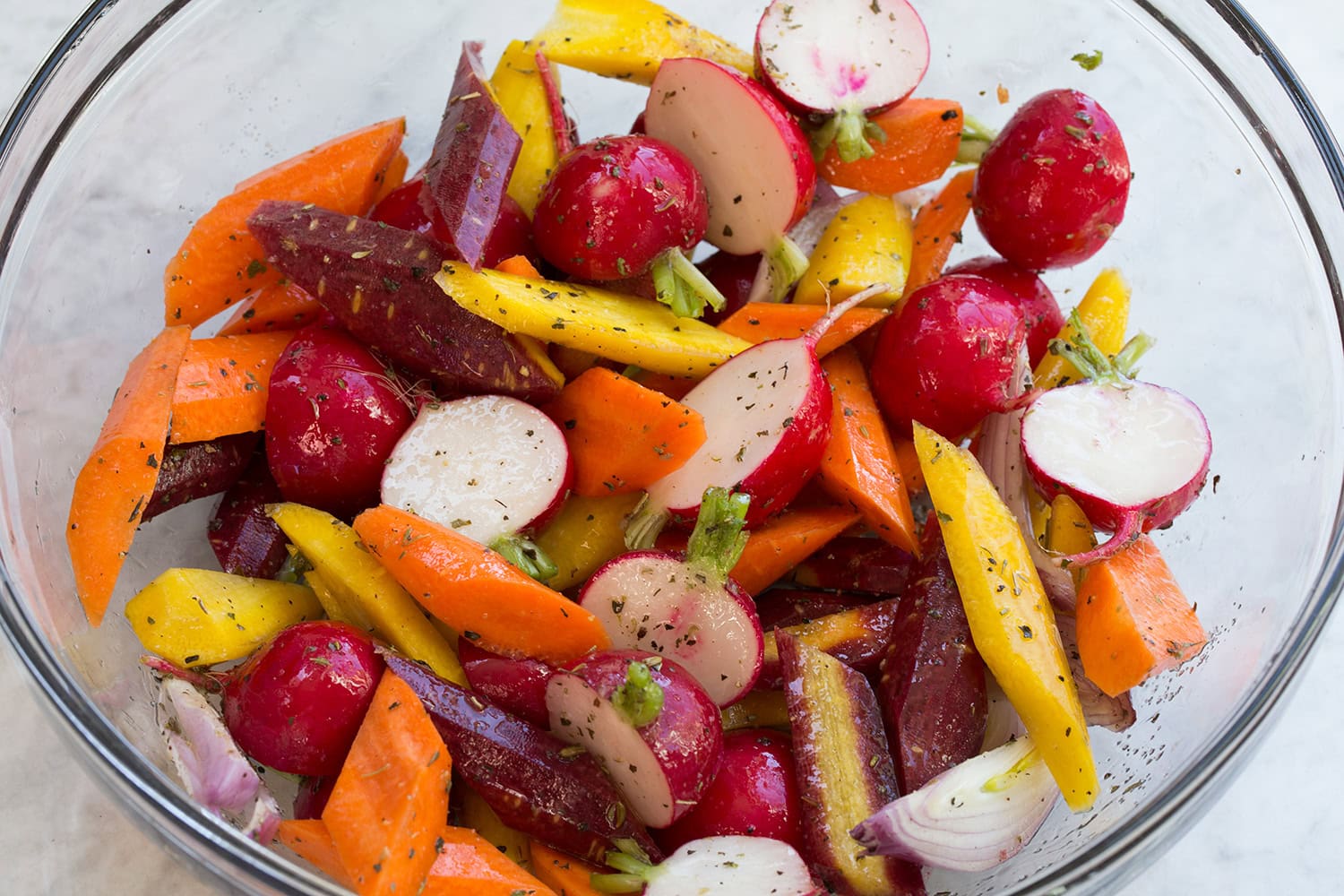
Toss veggies and seasoning: In a large mixing bowl toss together carrots and radishes with 1 1/2 Tbsp olive oil, 1 tsp Herbs de Provence and season with salt and pepper to taste.
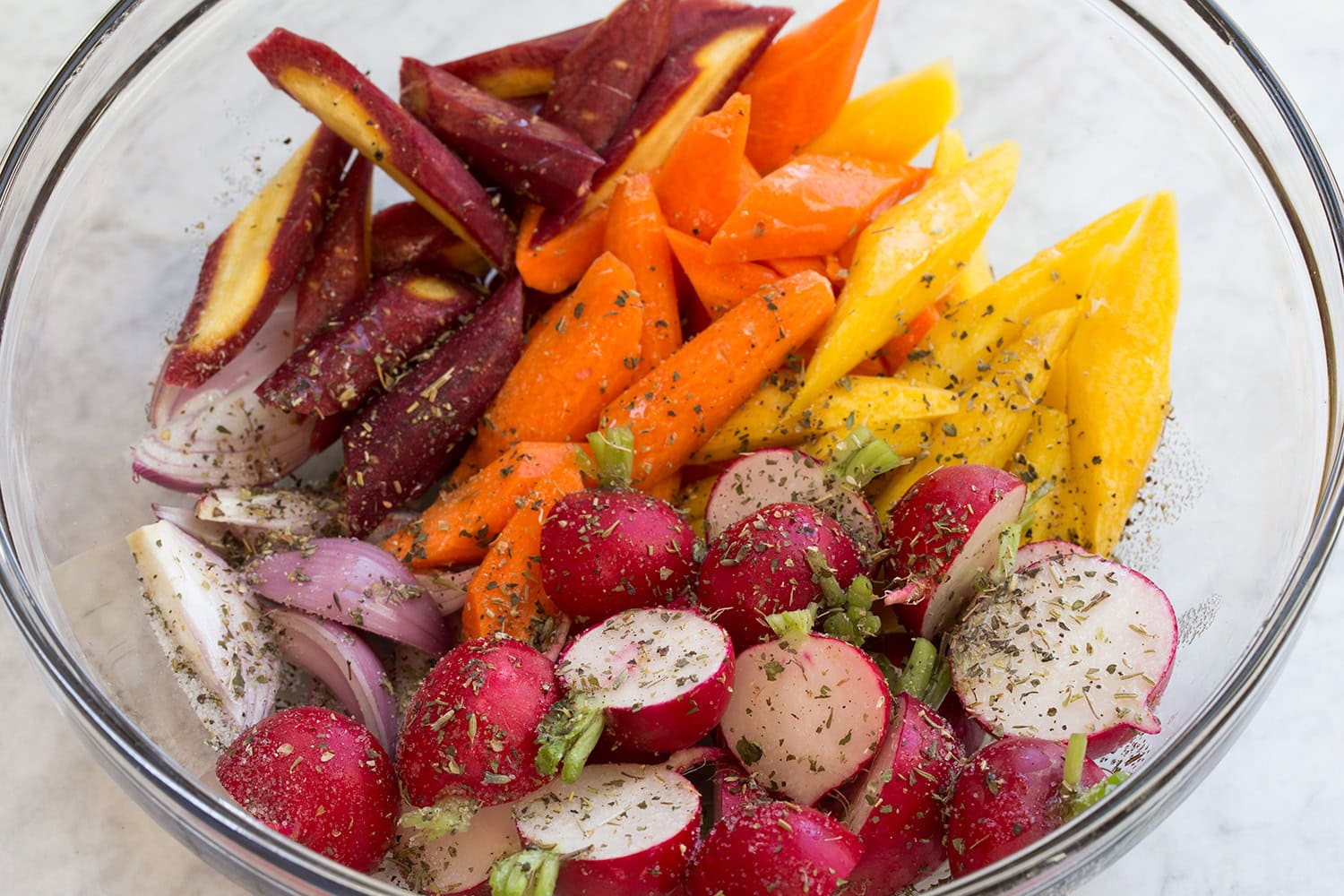
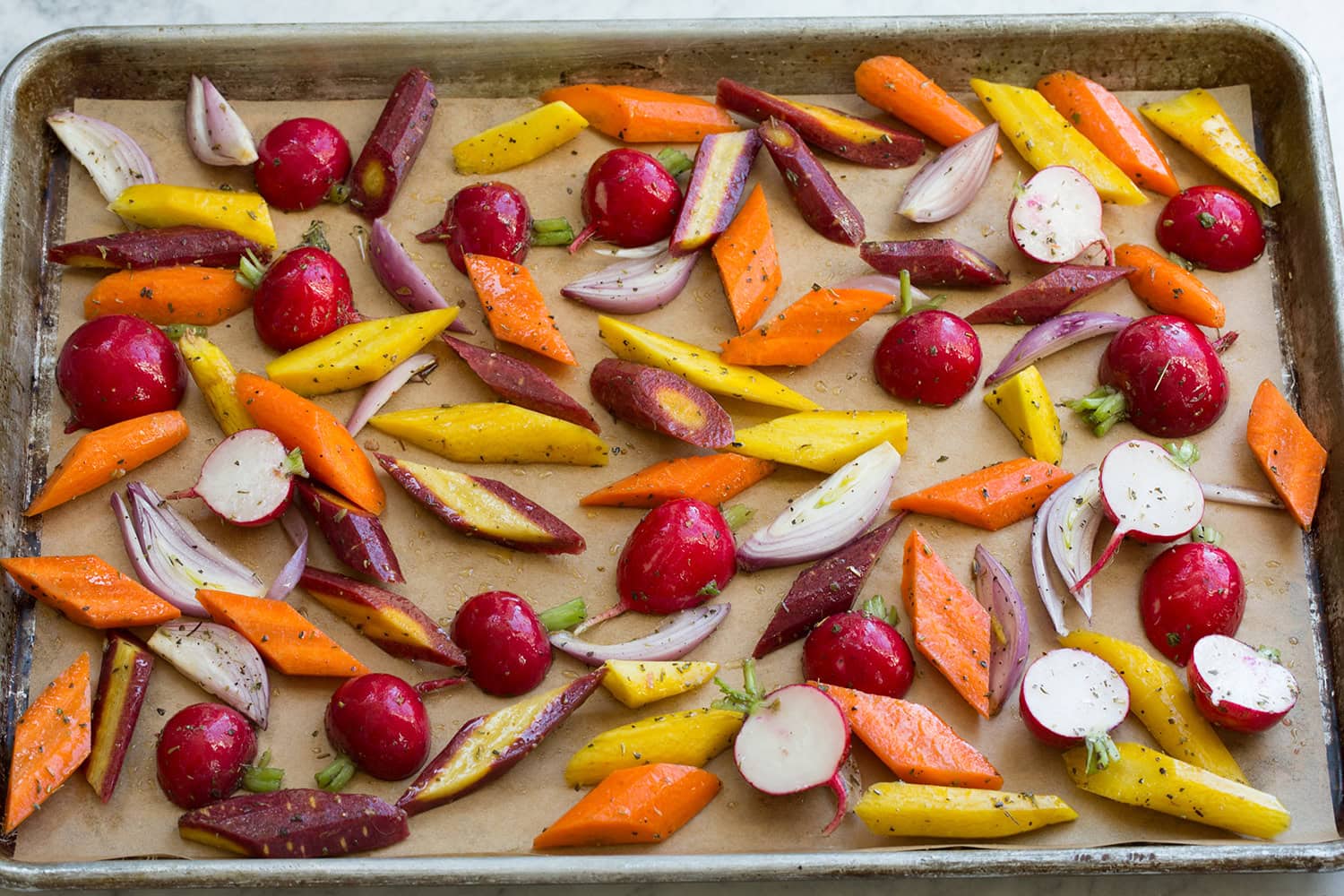
Place on baking dish, roast: Spread mixture out evenly onto baking sheet (set mixing bowl aside) and roast in preheated oven for 10 minutes.
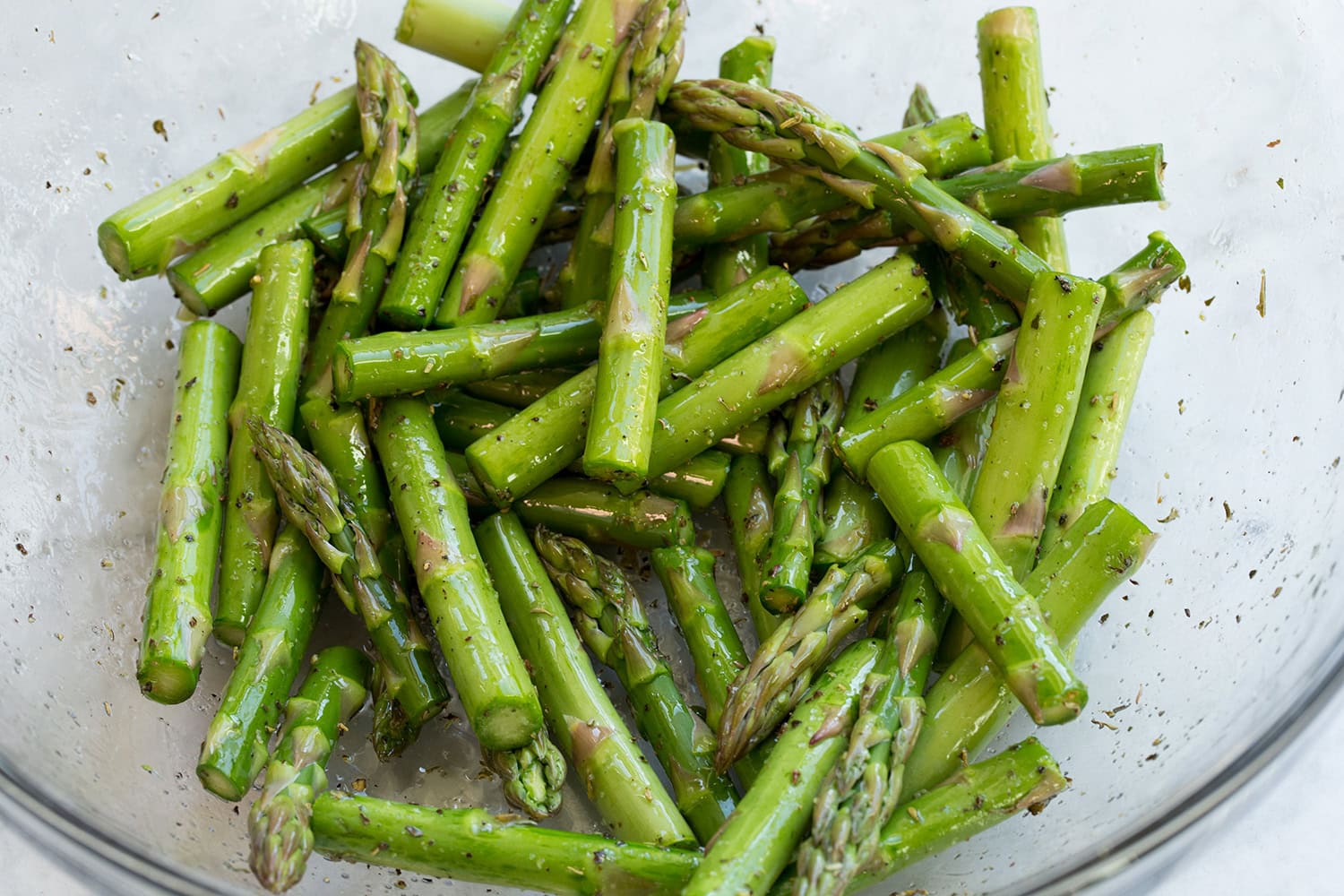
Toss asparagus with seasoning: In the same mixing bowl used before add asparagus plus remaining 1/2 Tbsp olive, 1/2 tsp Herbs de Provence and season with salt and pepper to taste and toss.
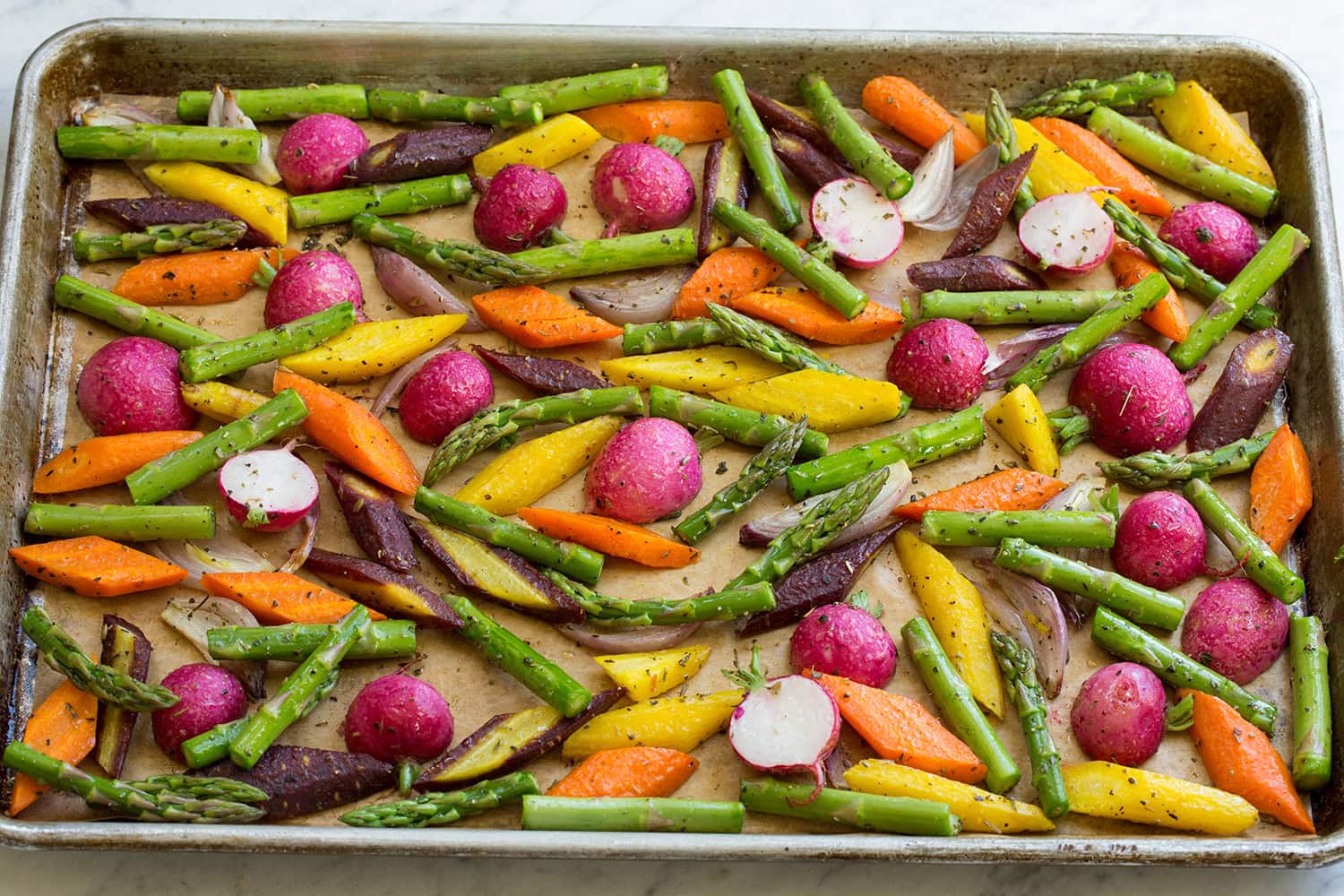
Add asparagus to other veggies: Once the 10 minutes is up for the roasted vegetables remove them and add the asparagus spreading them evenly over.
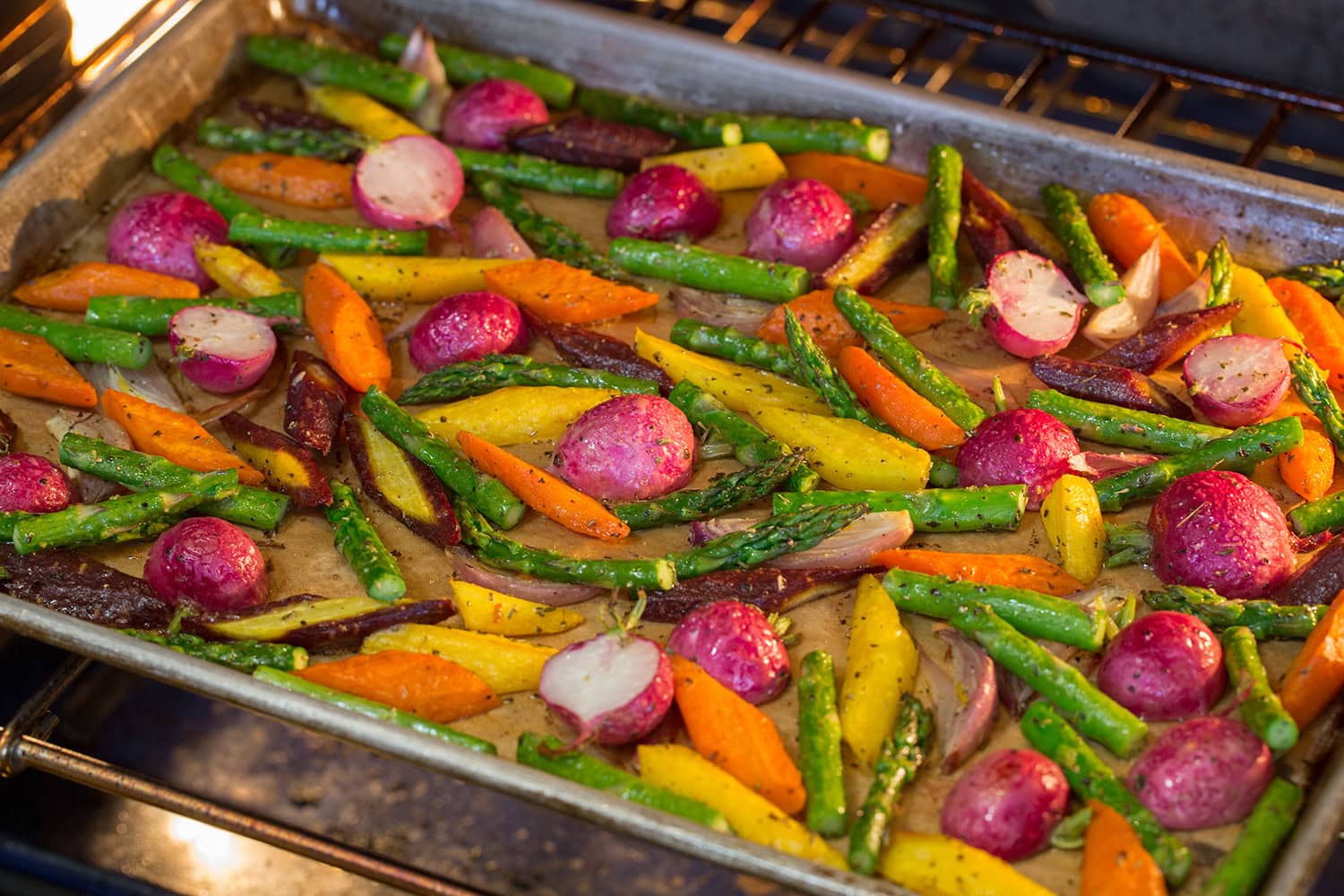
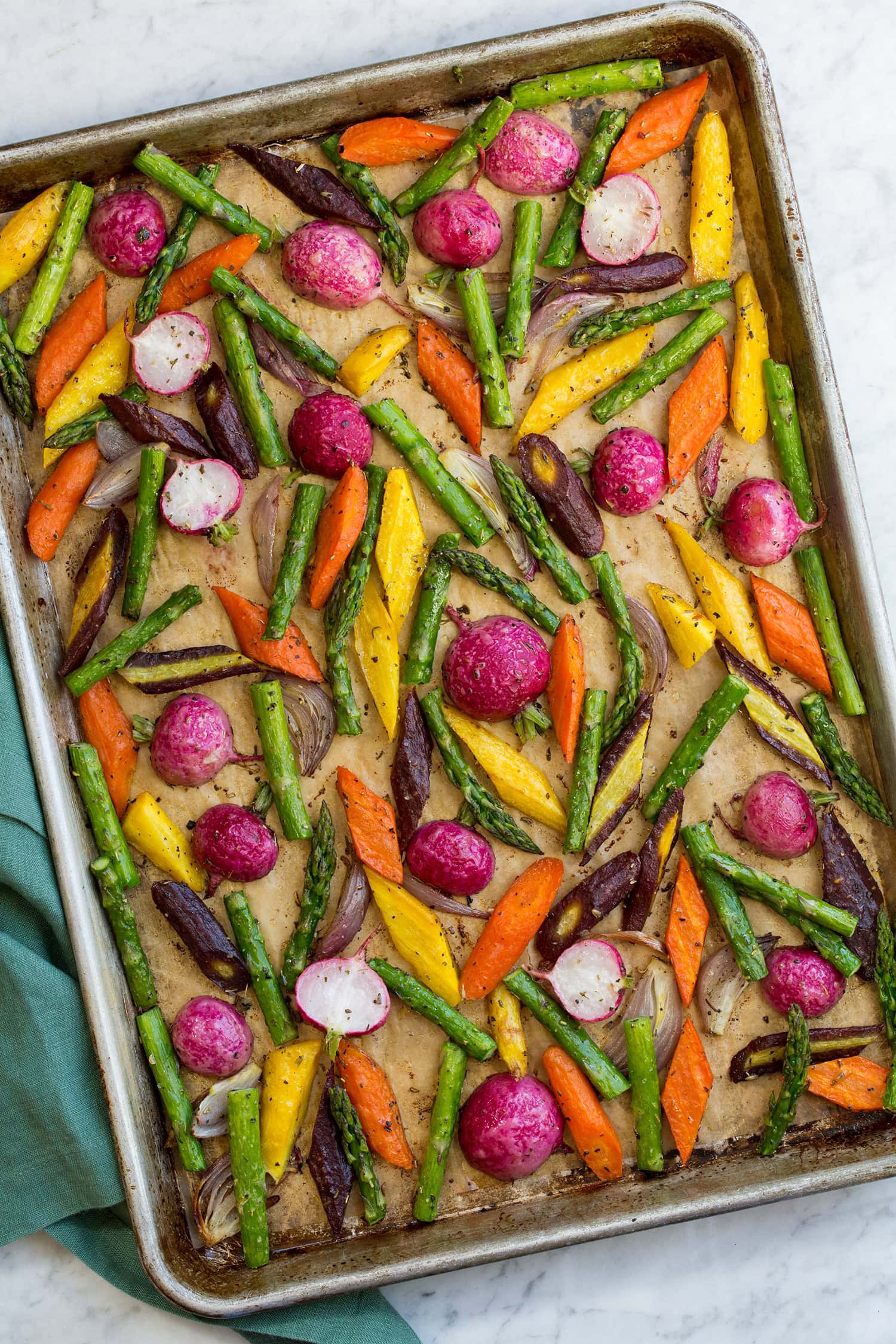
Roast veggies until cooked through: Return to oven and roast until vegetables have softened to your liking about 10 to 15 minutes longer.
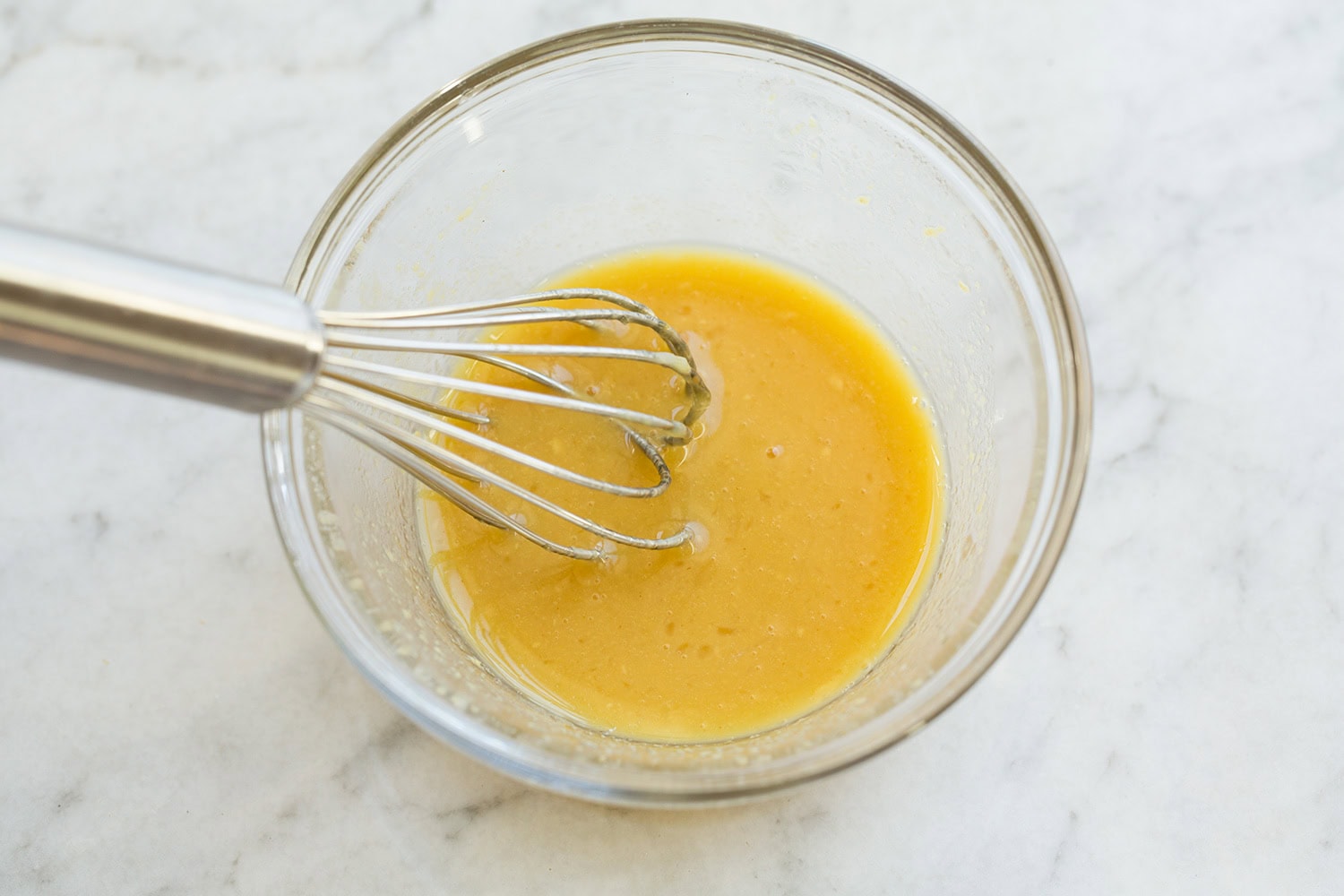
 Make sauce, add to roasted vegetables: In a small mixing bowl whisk together honey, lemon juice, and dijon mustard. Drizzle mixture evenly onto a serving platter. Add roasted vegetables and lightly toss, serve warm.
Possible Spring Vegetables to Substitute
Asparagus substitute: In this recipe you can substitute green beans for asparagus, but you’ll need to cook them for the full 20 to 25 minutes for them to become tender.
Radishes substitute: Beets can be used in place of the radishes, peel and chop them into pieces about 3/4-inch so they cook through within 25 minutes.
Carrots substitute: Parsnips can be used in place of carrots. A non-seasonal vegetable that would also work is butternut squash chopped small.
Just note that as you use these substitutes you color blend will change as well, the taste will remain a great blend still.
Topping Ideas
Nuts: Optionally you can also top the roasted vegetables with 1/2 cup chopped toasted walnuts or pecans, or roasted pistachios.
Cheese: If you want to add cheese top with 1/3 cup crumbled feta or goat cheese.
Helpful Tips
Vegetable size: Work to cut the each vegetable type into a similar size so they cook evenly and for uniformity for a more pleasing appearance and bite.
Freshest vegetables: For the best flavor use the freshest, high quality vegetables you can find.
Serving temperature: These are best served warm, if needed they can reheated.
Storing roasted vegetables: These can be stored in the fridge for up to 3 days in an airtight container.
How to Reheat Spring Vegetables
Single servings can be rewarmed in the microwave on a microwave safe dish until heated through about 1 minute.
Larger portions can be reheated on a greased baking sheet at 350 until warmed through, about 10 minutes or so. Just note that with reheating they will loose some of their color vibrancy.
More Vegetable Recipes to Try
- Roasted Autumn Vegetables
- Roasted Broccoli
- Grilled Vegetables
- Roasted Vegetables (a summer blend)
- Roasted Potatoes Carrots and Green Beans
Follow Cooking Classy
Roasted Spring Vegetables
Ingredients
- 12 oz. medium rainbow carrots, peeled, cut on a bias into 1 1/2-inch chunks, thicker portions halved
- 9 oz. radishes, ends trimmed, halved
- 1 medium shallot, peeled and sliced
- 2 Tbsp olive oil, divided
- 1 1/2 tsp Herbs de Provence, divided
- Salt and black pepper, to taste
- 12 oz. asparagus, tough ends trimmed, remaining cut into 2-inch portions
- 2 tsp honey (warmed if needed to make it runny)
- 2 tsp fresh lemon juice
- 2 tsp dijon mustard
Instructions
- Heat oven to 425 degrees. Line a rimmed 18 by 13-inch baking sheet with parchment paper or spray with non-stick cooking spray.
- In a large mixing bowl toss together carrots, radishes and shallot with 1 1/2 Tbsp olive oil, 1 tsp Herbs de Provence and season with salt and pepper to taste.
- Spread mixture out evenly onto baking sheet (set mixing bowl aside) and roast in preheated oven for 10 minutes.
- In the same mixing bowl used before add asparagus plus remaining 1/2 Tbsp olive, 1/2 tsp Herbs de Provence and season with salt and pepper to taste and toss.
- Once the 10 minutes is up for the roasted vegetables remove them and add the asparagus spreading them evenly over.
- Return to oven and roast until vegetables have softened to your liking about 10 to 15 minutes longer.
- In a small mixing bowl whisk together honey, lemon juice, and dijon mustard. Drizzle mixture evenly onto a serving platter. Add roasted vegetables and lightly toss, serve warm.